Find My Charism
Making arrangements
You organize a shared task so that people know what is needed and can contribute.
Coordinating people and resources so a shared purpose can be carried out.
Wondering how this gift may show up in your life? Discover your charisms →
Administration helps people and resources work together so a shared purpose can be carried out. The Holy Spirit can work through planning, organizing, and following through to make others’ service possible. It may mean coordinating volunteers, caring for supplies, or removing a practical obstacle. Its particular contribution is arranging the work so people can use their gifts well. Listening and sharing responsibility keep organization in service of the Church’s mission.
Consider the relationships and responsibilities already part of your life.
You organize a shared task so that people know what is needed and can contribute.
You notice missing supplies, conflicting commitments, or a practical obstacle before it stops someone else’s work.
You help people take responsibility while making room for their abilities and ideas.
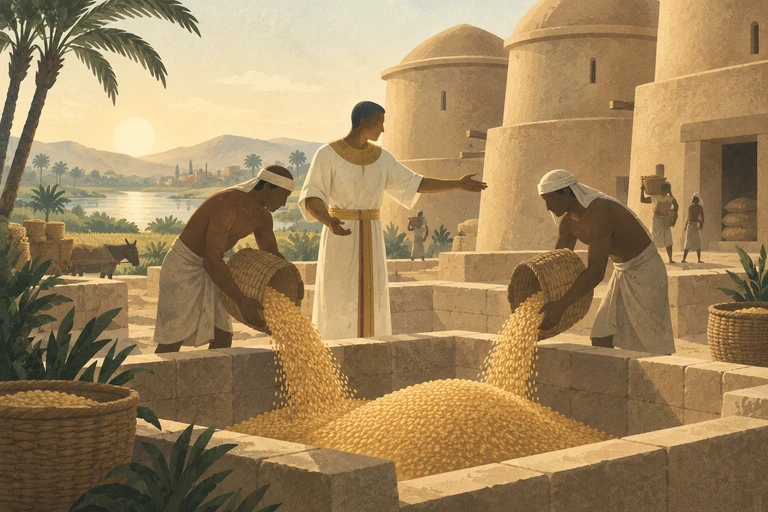
The image at the top of this page shows Joseph gathering grain during Egypt’s years of abundance. The stored grain will become provision for people facing famine.
This food will serve as a reserve for the country … so that the land may not perish in the famine.
Joseph receives understanding from God and responds with preparations that protect people from hunger. The point of the storehouses is the life they will sustain. Administration can serve that same concern for people by putting foresight and shared resources to work for their good.
Paul specifically names administration and assistance among the gifts serving the Church. All come from the same Spirit and are given for others’ good.
Charisms are gifts of the Holy Spirit for building up the Church and serving others. Love is their measure, and their discernment includes the guidance of the Church’s pastors.
Prudence helps people judge the good in concrete circumstances and choose suitable means of achieving it.

These ministries and programs may offer ways to serve through Administration. Speak with parish staff about where help is needed, how to prepare, and the parish’s volunteer process.
Help parish staff and ministry leaders organize the practical work that allows others to serve.
Help with parish gatherings such as retreats, Lenten suppers, community meals and fellowship events, making it easier for people to take part.
Help neighbors obtain food, clothing and other necessities through a parish pantry, a St. Vincent de Paul conference, or a Catholic charitable agency.
Ministry-formation workshops from Franciscan University’s Catechetical Institute for catechists, parish teams and other people serving the Church. Ask your parish or diocese about available formation and access.
Bring these experiences to prayer, Mass and the sacraments, and conversation with a priest or trusted guide in the faith. Look over time for love of God and neighbor, faithfulness to Church teaching, and the good of those you serve. Joy, difficulty, and others’ feedback can help you recognize patterns. Notice whether your organizing repeatedly frees others to contribute, including when plans need to change. If no example comes to mind, begin with the experience suggested below.
Recall a plan that helped others serve. What became possible for them, and what did you change after listening?
When a group follows a different plan from yours, what helps you keep serving its shared purpose with freedom and care?
Something to try: Offer to organize one agreed task in a group you know. Clarify its purpose and invite others’ ideas. Ask afterward what helped them contribute, make one adjustment, and notice what you learn the next time you work together.

Come, Holy Spirit. Help me organize with patience and see the people behind each task.
May the plans I make give others room to contribute and help our work serve those who need it.
Saint Teresa of Ávila, pray for me.
Through Christ our Lord. Amen.
Teresa was a Spanish Carmelite nun who worked to renew her order’s life of prayer and founded new communities. Her writings, including The Interior Castle, continue to guide people in prayer. Establishing those communities also required planning, organization, and persistence. Her work shows how practical leadership can support a spiritual purpose and give others the setting they need to live their calling.
More about her life ↗