Find My Charism
Sharing what you have
You make a useful resource available when it can meet someone’s need.
Sharing time and resources with a readiness to respond to others’ needs.
Wondering how this gift may show up in your life? Discover your charisms →
Generosity shares time, abilities, money, and possessions to meet the needs of others. Through this gift, the Holy Spirit helps someone give freely and with joy, sometimes at a real personal cost. They notice where what they have could make a difference and offer it with care. Giving seeks the other person’s good while honoring responsibilities to those who depend on us.
Consider the relationships and responsibilities already part of your life.
You make a useful resource available when it can meet someone’s need.
You listen before deciding what to give, so that your gift responds to the person’s situation.
You set aside resources for others rather than leaving every act of giving to chance.
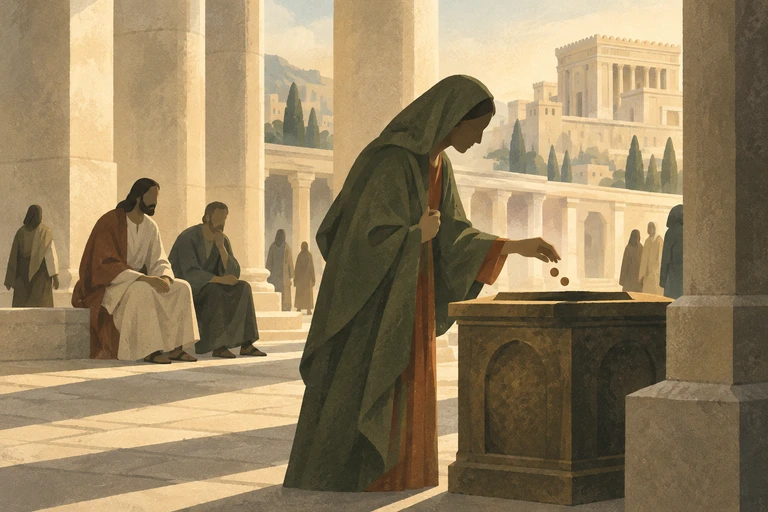
The image at the top of this page shows a widow placing two small coins in the temple treasury. Jesus notices the significance of a gift others might overlook.
…she, from her poverty, has contributed all she had, her whole livelihood.
Jesus notices the widow’s costly offering, teaching us to look beyond the size of a gift. Just before this scene, he condemns those who exploit widows. Her generosity gives no one permission to pressure a vulnerable person into giving what they need to live.
Paul describes a variety of gifts from the same Spirit, given for the benefit of the whole body.
Charisms are gifts of the Holy Spirit for building up the Church and serving others. Love is their measure, and their discernment includes the guidance of the Church’s pastors.
The communion of the Church includes sharing gifts and goods in charity for the benefit of others.
Paul names generous giving among the gifts exercised in the community, alongside leadership and works of mercy.

These ministries and programs may offer ways to serve through Generosity. Speak with parish staff about where help is needed, how to prepare, and the parish’s volunteer process.
Help neighbors obtain food, clothing and other necessities through a parish pantry, a St. Vincent de Paul conference, or a Catholic charitable agency.
Prepare or deliver meals for someone recovering from illness or surgery, welcoming a new baby, or facing a difficult season. Parish meal teams or coordinated meal trains make this practical help possible.
Help pregnant and parenting mothers find practical support through a parish team or an established Catholic partner. Walking with Moms in Need is one familiar parish approach.
A guided journey through the Catechism of the Catholic Church, connecting Catholic teaching with Scripture and daily life, offered by Ascension.
Bring these experiences to prayer, Mass and the sacraments, and conversation with a priest or trusted guide in the faith. Look over time for love of God and neighbor, faithfulness to Church teaching, and the good of those you serve. Joy, difficulty, and others’ feedback can help you recognize patterns. Notice what your giving makes possible and how freely you can let the gift belong to its recipient. If no example comes to mind, begin with the experience suggested below.
Recall a gift that cost you something. What good did it make possible, and what did giving it reveal about what you value?
When a gift receives little thanks or is used differently than you hoped, how do you respond while respecting the recipient’s freedom?
Something to try: Choose a real need and a responsible gift of time, money, or something useful. Offer it without conditions. Later, reflect on what it made possible and on your own expectations; ask about its usefulness only in a way that leaves the recipient free of obligation.

Come, Holy Spirit. Help me receive what I have with gratitude and hold it with open hands.
Give me wisdom to share responsibly and love that seeks another person’s good.
Saint Francis of Assisi, pray for me.
Through Christ our Lord. Amen.
The son of a prosperous merchant in Assisi, Italy, Francis gave up his claim to his family’s wealth to follow Christ in poverty. He cared for people with leprosy and gathered brothers who shared his life of prayer and preaching. His generosity went beyond giving possessions: he offered his time, friendship, and life in service of the Gospel.
More about his life ↗