Find My Charism
During illness
You arrange a meal, an errand, or a visit that meets a need the person has actually expressed.
Offering dependable practical support for another person’s continuing burdens.
Wondering how this gift may show up in your life? Discover your charisms →
Caregiving offers dependable practical support that helps another person carry a burden. The Holy Spirit can work through meals, errands, visits, and steady help during illness or a difficult time. Its emphasis is attending to a person’s continuing needs, while Service may focus on a task and Mercy on compassionate presence. Listening, respecting the person’s dignity, and following through make that care an expression of Christ’s love.
Consider the relationships and responsibilities already part of your life.
You arrange a meal, an errand, or a visit that meets a need the person has actually expressed.
You help with a responsibility that has become difficult for someone to manage alone.
You remember that support may still be needed after the first urgent days have passed.
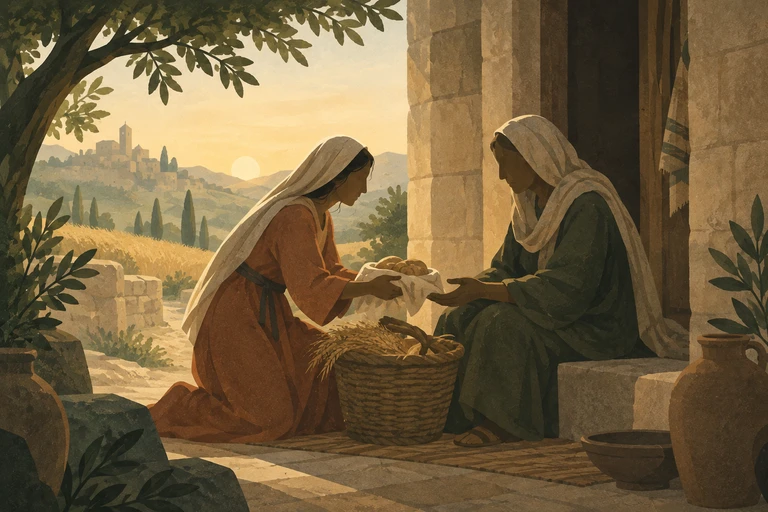
The image at the top of this page shows Ruth bringing home grain gathered from what the harvesters left behind. Ruth, a widowed foreigner, shares her food with her mother-in-law Naomi; care is offered from within her own vulnerability. Earlier, Boaz has recognized the faithful care she has shown Naomi after her husband’s death.
I have had a complete account of what you have done for your mother-in-law after your husband’s death…
Ruth’s care takes the form of food, work, and faithful presence. Another person’s burden is met through something concrete she can offer.
Paul describes a variety of gifts from the same Spirit, given for the benefit of the whole body.
Charisms are gifts of the Holy Spirit for building up the Church and serving others. Love is their measure, and their discernment includes the guidance of the Church’s pastors.
The works of mercy include practical care for people’s bodily and spiritual needs.
Jesus identifies himself with people who are hungry, strangers, sick, or imprisoned. Care offered to them is service offered to him.
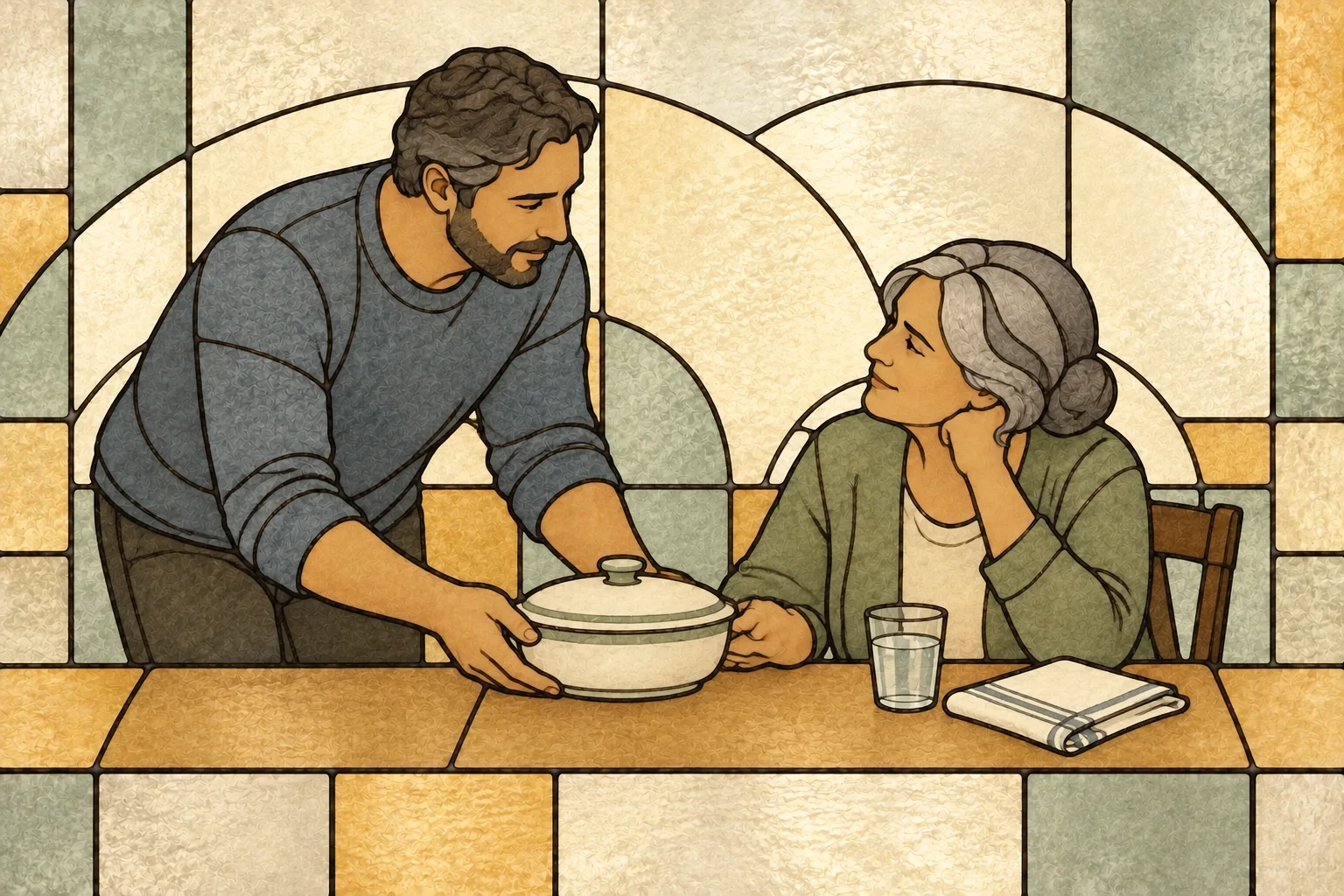
These ministries and programs may offer ways to serve through Caregiving. Speak with parish staff about where help is needed, how to prepare, and the parish’s volunteer process.
Prepare or deliver meals for someone recovering from illness or surgery, welcoming a new baby, or facing a difficult season. Parish meal teams or coordinated meal trains make this practical help possible.
Offer companionship and practical care through the parish’s ministry to people who cannot easily take part in parish life.
Help parishioners who cannot attend Mass receive Holy Communion through the parish’s ministry to the sick and homebound.
Ministry-formation workshops from Franciscan University’s Catechetical Institute for catechists, parish teams and other people serving the Church. Ask your parish or diocese about available formation and access.
Bring these experiences to prayer, Mass and the sacraments, and conversation with a priest or trusted guide in the faith. Look over time for love of God and neighbor, faithfulness to Church teaching, and the good of those you serve. Joy, difficulty, and others’ feedback can help you recognize patterns. Attend to the steady difference your care makes as another person’s needs change. If no example comes to mind, begin with the experience suggested below.
Think of a need you supported over time. How did listening change your understanding of what actually helped?
When caring becomes tiring or the need keeps growing, how do you remain faithful while honoring your other responsibilities and asking for help?
Something to try: Ask someone who would welcome help what would ease their week. Agree on one manageable act of care, follow through, and ask what helped. Revisit the arrangement if the need continues, noticing both the person’s relief and the support you need to keep your commitment.

Come, Holy Spirit. Help me notice the burdens that another person is carrying.
Give me the patience to listen and the faithfulness to offer practical care with respect and love.
Saint Teresa of Calcutta, pray for me.
Through Christ our Lord. Amen.
Mother Teresa left her teaching work in Calcutta, India, to live among and serve people who were poor. She founded the Missionaries of Charity, whose sisters cared for people who were abandoned, sick, and dying. Seeing Jesus in each person, she joined practical help with a faithful presence, showing how caregiving can communicate Christ’s love to someone who feels forgotten.
More about her life ↗